

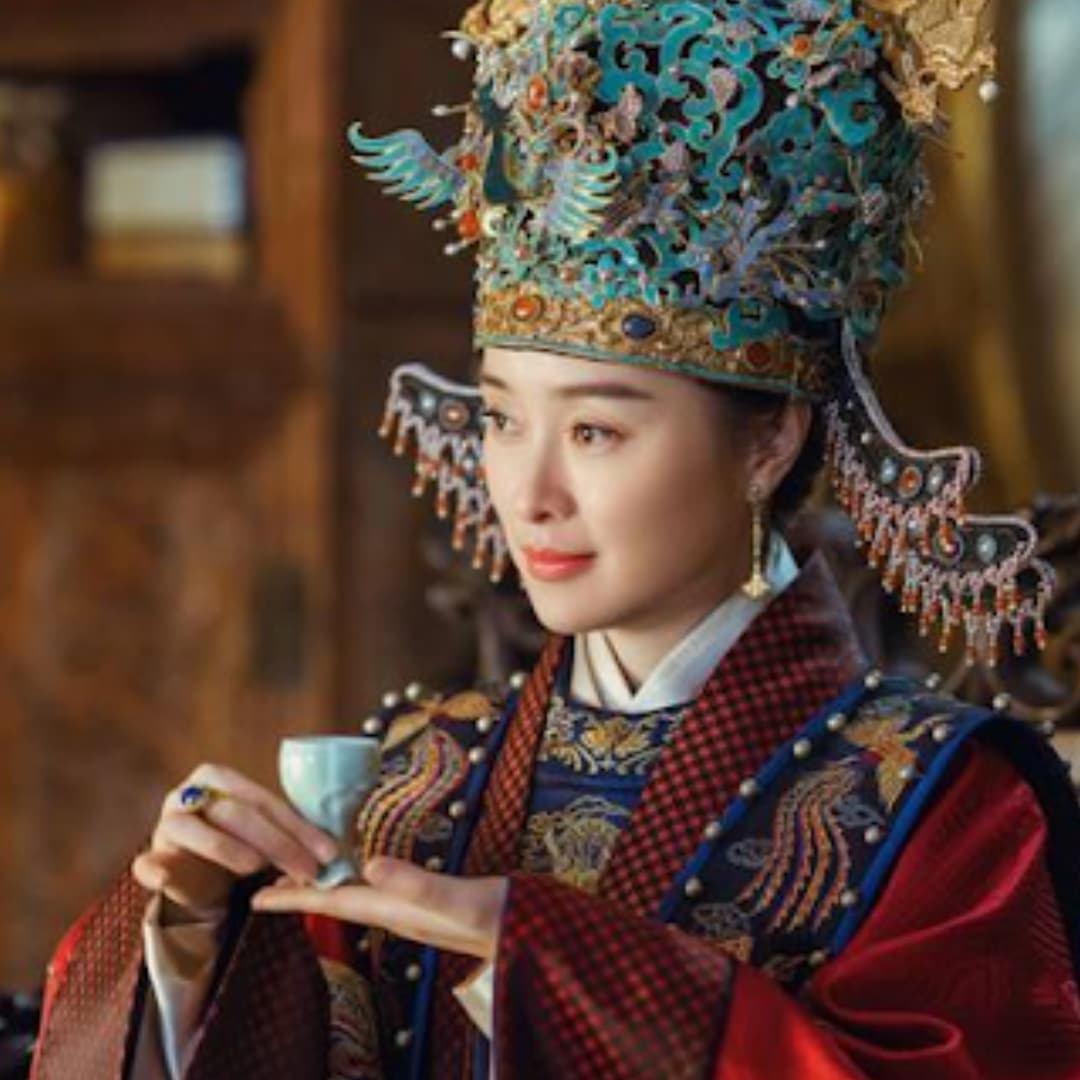
Empress Zhang (c. 1384–1442) successfully guided three emperors with her political acumen. Her regency was marked by prosperity and stability. As such, she is regarded as one of the most powerful empresses of the Ming Dynasty and in the history of China as a whole.
Empress Zhang: the power behind her husband
Little is known about Empress Zhang’s early life, including her personal name. Her brothers became earls and prominent military officials. She married Zhu Gaochi, the son of the Yongle Emperor and future Hongxi Emperor. In 1399, she gave birth to their son, Zhu Zhanji, who would later become the Xuande Emperor. She later had two more sons and a daughter.
Lady Zhang stood by her husband through difficult times. In 1404, Zhu Gaochi was appointed heir apparent, but his father doubted his suitability. Unlike his father, Zhu Gaochi was plump and quiet, which led to concerns about his ability to rule. However, Lady Zhang’s intelligence, respectful nature, and strong management skills helped her husband maintain his position.
Pilar of the dynasty: advisor to emperors Zhu Gaochi and Zhu Zhanji
In 1424, Zhu Gaochi ascended the throne, and Lady Zhang became Empress. She was known for her wisdom and capability. The History of the Ming records that “there was nothing of administrative importance, whether in the palace or abroad, with which she was unfamiliar.”
Nine months later, Zhu Gaochi died, and Empress Zhang became Empress Dowager when their son, Zhu Zhanji, took the throne as the Xuande Emperor. He regularly sought her advice on political matters, and she often accompanied him on outings. During one such occasion, local people presented her with food, which she gave to the emperor, saying, “These are what the farming people eat.”
When her son deposed Empress Hu in favor of a consort, the future Empress Sun, Dowager Zhang sympathized with the deposed empress. During banquets, she seated Hu in a position of honor, a decision that greatly displeased Sun.
The first empress regent of the Ming Dynasty
In early 1435, Zhu Zhanji died, leaving the throne to his young son, Zhu Qizhen. Having a minor emperor was unprecedented in the Ming dynasty. The ministers urged Empress Dowager Zhang to rule from behind the screen, but she declined, stating, “We should not break the rules of our ancestors.”
Although her regency was never formalized, she remained the true authority from 1435 to 1442. She surrounded herself with trusted officials and had the final say on political and military matters.
At one point, she nearly had her grandson’s confidant, the eunuch Wang Zhen, executed. She feared he was gaining too much influence, a concern that later proved justified. She summoned female palace officials armed with knives and swords, but Wang Zhen was spared when the emperor and his ministers knelt before her, pleading for his life.
Empress Zhang’s rule brought social and economic prosperity. She died in 1442 after an illness and was posthumously honored with the title Chengxiao. She was buried alongside her husband.

I run this project on a voluntary basis because I think these women’s stories deserve to be told. My goal is to build a comprehensive online archive to safeguard this heritage.
Hours of research hide behind each post. My content is human-written, without AI-Generated visuals.
To help me continue this project or to show you appreciation, please consider donating to my Ko-Fi!
Further reading and bibliography about Empress Zhang of Ming
Lin Yanqing, “Zhang, Empress of the Hongxi Emperor, Renzong, of Ming”, in: Lee Lily Xiao Hong, Wiles Sue (eds.), Biographical Dictionary of Chinese Women, Volume II: Tang Through Ming 618 – 1644
McMahon Keith, Celestial Women: Imperial Wives and Concubines in China from Song to Qing
Sign up so you don’t miss any of the new articles!
Leave a comment